CUSTOMS AND CULTURE
The Ogu culture has been modified by the influences of foreign cultures that were brought into Badagry by the early missionaries, traders and immigrants that sorted for refuge in Badagry. Today, Badagry is a multicultural town consisting of three major ethnic groups namely, the Ogu, Awori and Ayonu, who have coexisted peacefully for more than 100 years. Though versions of the history of the founding of the town differ, it is generally agreed that these three groups are indigenes of the town.
Badagry is blessed with rich historical and cultural heritage. Zangbeto and Sato are two major elements of Badagry’s cultural heritage that is very popular all over the world.
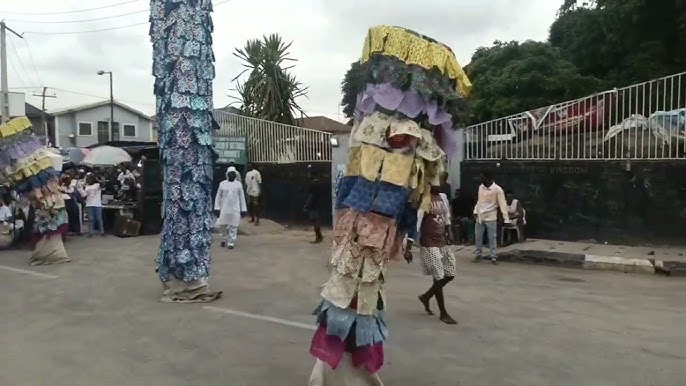
ZANGBETO
Zangbeto, the night watch Lord, is said to be as old as the Ogu people. Zangbeto has its origins lie in the pre-colonial history of the Ogu people of Badagry and the coastal region neighbour of Porto-Novo and has been seen and generally regarded as a cultural emblem of the Ogu people. Zangbeto (Zan – night; gbeto – person/people) literally means ‘watchers or men of the night.’
Zangbeto is believed by the Ogu people to be a Spirit, Messenger, Peace Maker, Custodian of Ogu culture and values, and Conflict Mediator at the community level.
In the mid-19th century, neighbouring nations (Old Oyo Empire and Dahomey) were interested in gaining control of Badagry because, with its seaport, it was both a strategic link in the trans-Atlantic trade and a terminus for trade routes from the interior. Zangbeto was used to protect the town from external aggression.

SATO DRUM
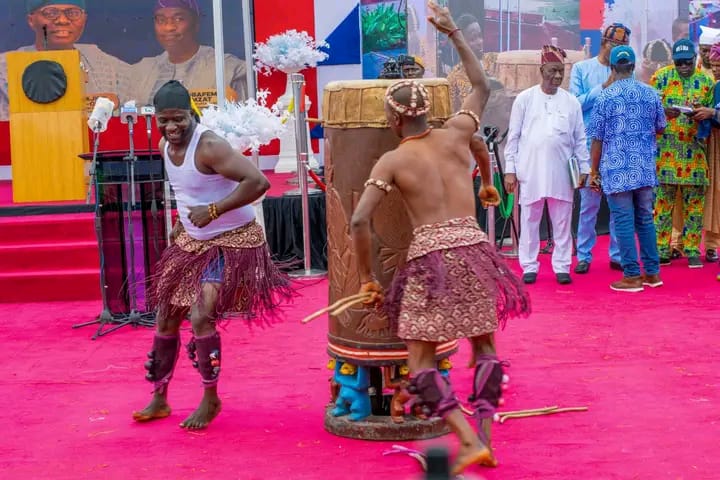
The origin of Sato drums is said to be from an area in Badagry called Akarakumoh. The drums were built by three men; Kodjo, Avidagba and Tosavi. The drums were first beaten in Akarakumoh village in Badagry.
Sato drums are used and beaten on special occasions, particularly at burials of old and renowned individuals. The drums are approximately three metres tall and beaten with seven long drumsticks. Those who play the drums must jump simultaneously at the rhythm of the drum, wear traditional attire and perform acrobatic displays. Those who play the drums must be orphans. Someone who has lost one parent can only use one hand to play the drum and an orphan who has lost both parents can use two hands. If both parents are still alive, you cannot play any of the drums. The drums are hollow and must be covered.
EGUNGUN (Masquerade Tradition)
Egungun is one of the most revered and visually captivating cultural traditions in Badagry and across Yorubaland. It represents the ancestral lineage of families and communities, symbolizing the spiritual return of departed forebears to bless, guide, and protect the living.
Deeply rooted in Yoruba cosmology, the Egungun masquerade embodies the belief that the dead are not entirely gone but continue to play an active role in the affairs of their descendants. During Egungun festivals, elaborately costumed masqueraders – adorned in layers of richly embroidered fabrics, vibrant textiles, beads, and charms – emerge in grand processions accompanied by rhythmic drumming, chanting, and traditional music.
The festival serves multiple purposes. Spiritually, it is a period of ancestral reverence and prayer for communal peace, prosperity, and protection. Socially, it reinforces family bonds and lineage identity, as specific Egungun are tied to particular families or compounds. Culturally, it is a powerful medium for preserving oral history, moral instruction, and communal values.
Egungun performances are marked by graceful yet dramatic movements, symbolic gestures, and interactions with spectators. The masquerade is regarded with great respect, and certain rituals and restrictions govern its appearance and conduct. Elders and custodians of tradition oversee the ceremonies to ensure that sacred customs are upheld.
In Badagry, Egungun remains a living heritage – an enduring expression of identity, spirituality, and intergenerational continuity.
IGUNUKO (Spirit Masquerade Tradition)
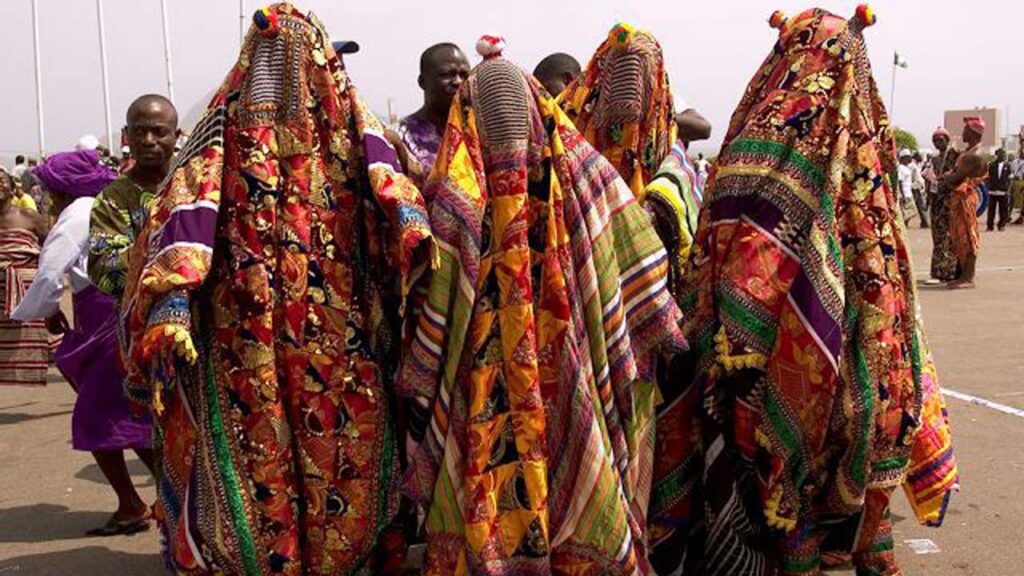
Igunuko is another significant traditional masquerade in Badagry, known for its imposing presence and deep spiritual symbolism. Unlike the more flamboyant Egungun, Igunuko is often associated with mystery, authority, and ancestral power.
The Igunuko masquerade typically appears fully covered from head to toe in thick traditional materials, with a concealed face and a commanding aura. Its presence is often heralded by traditional drummers and attendants who ensure order and maintain the sanctity of its movement through the community.
Historically, Igunuko is regarded as a spiritual guardian and a symbol of ancestral authority. It plays a vital role during important community events, festivals, and rites, reinforcing moral discipline and communal values. The appearance of Igunuko is treated with seriousness and reverence, as it represents not merely entertainment but a sacred cultural institution.
The tradition also reflects Badagry’s rich blend of indigenous beliefs and long-standing heritage practices. Through chants, drumming, and ritual observances, the Igunuko masquerade continues to preserve historical narratives and spiritual connections passed down through generations.
Today, both as a cultural spectacle and a sacred institution, Igunuko stands as a testament to Badagry’s enduring traditional identity and the community’s commitment to preserving its ancestral heritage.