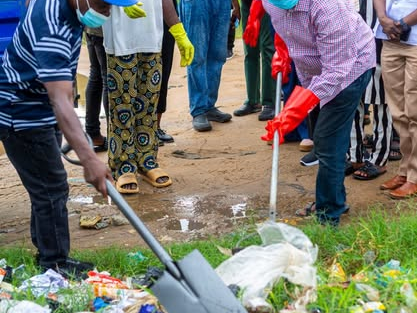
The Executive Chairman of Badagry Local Government, Hon. Babatunde Hunpe, fMHR, has reaffirmed his administration’s unwavering commitment to environmental sustainability, public health, and community wellbeing by personally leading and supervising the June edition of the reintroduced Monthly Environmental Sanitation Exercise across the local government area.
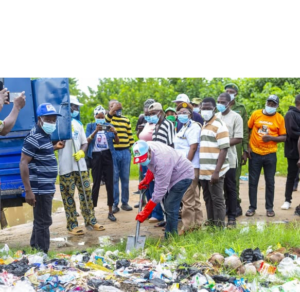
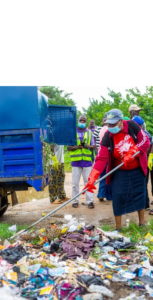
The sanitation exercise, which has become a key component of the administration’s “Keep Badagry Clean Initiative,” reflects the Council’s determination to promote environmental responsibility, prevent flooding, reduce the spread of diseases, and create a cleaner, healthier, and more attractive environment for residents and visitors alike.
Strengthening Environmental Responsibility Across Badagry
The monitoring exercise commenced at the Badagry Local Government Secretariat, from where the Executive Chairman and his entourage embarked on an extensive inspection tour of several strategic roads and communities, including Joseph Dosu Way, Soglo Way, Awhanjigoh, Boekoh, Aradakoh, the road behind the Muslim Cemetery, and Oropo.
During the exercise, Hon. Hunpe monitored ongoing sanitation activities, assessed the level of environmental compliance, interacted with residents, and encouraged communities to sustain the culture of cleanliness through collective responsibility and active participation.
The inspection also provided an opportunity for the Chairman to identify sanitation challenges requiring immediate government intervention while evaluating the effectiveness of existing environmental management strategies.
Broad Stakeholder Participation Demonstrates Collective Commitment
The monthly sanitation exercise witnessed impressive participation from government officials, environmental agencies, traditional institutions, political stakeholders, and community members, underscoring the growing public support for the administration’s environmental agenda.
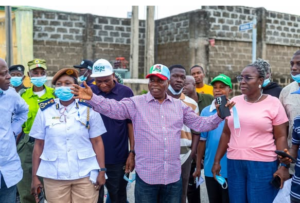
Among those who participated were the First Lady of Badagry Local Government, Chief Mrs. Elizabeth Oluwatoyin Hunpe; the Vice Chairman, Hon. Akeem Adeyemi; Councillors led by the Leader of the House, Hon. Bankole Mautin Asokere; political appointees led by the Secretary to the Local Government, Mr. Benjamin Adagba; the Council Management Team headed by the Council Manager, Mrs. Avoseh-Akwe Senami Oluwakemi; Environmental Health Officers; officials of the Kick Against Indiscipline (KAI); community leaders; market representatives; youth groups; and residents from various communities.
Their active participation highlighted the growing understanding that environmental sanitation is not solely the responsibility of government but a collective civic obligation that requires sustained cooperation from every member of society.
Chairman Commends Residents for Improved Compliance
Addressing journalists during the inspection, Hon. Babatunde Hunpe expressed satisfaction with the noticeable improvement in residents’ compliance with the monthly sanitation programme, describing it as a positive indication of increasing public awareness and stronger community ownership of environmental sanitation initiatives.
According to the Chairman:
“I am encouraged by the level of compliance and the commitment shown by our residents. A clean environment is not the responsibility of government alone; it is a collective duty that requires the participation of every individual, household, business, and community.”
He noted that the progress recorded since the reintroduction of the sanitation exercise demonstrates that consistent public enlightenment, stakeholder engagement, and community mobilisation are yielding positive results.
Call for Responsible Waste Disposal During the Rainy Season
With the rainy season already underway, Hon. Hunpe urged residents to remain vigilant by adopting proper waste disposal practices and avoiding activities that contribute to environmental degradation.
He appealed to households, traders, transport operators, artisans, and business owners to desist from dumping refuse into drainage channels, canals, waterways, and public spaces, warning that such practices significantly increase the risk of flooding, environmental pollution, and the outbreak of preventable diseases.
The Chairman stressed that keeping drainage systems free of refuse remains one of the most effective ways to reduce flooding during heavy rainfall while maintaining clean surroundings helps protect communities from sanitation-related illnesses.
Government Intensifies Environmental Interventions
Hon. Hunpe reaffirmed that his administration will continue to strengthen environmental management through a combination of infrastructure improvement, strategic partnerships, and community engagement.
He highlighted several ongoing interventions being implemented by the Council, including:
- Continuous desilting and clearing of drainage channels to improve water flow.
- Prompt evacuation of refuse in collaboration with LAWMA-accredited Private Sector Participation (PSP) operators.
- Public enlightenment campaigns promoting proper sanitation habits.
- Enhanced environmental monitoring and enforcement.
- Community-based sanitation initiatives aimed at sustaining cleaner neighbourhoods.
These interventions, he explained, form part of the administration’s broader commitment to building a cleaner, healthier, and more resilient Badagry capable of supporting sustainable economic growth and improved quality of life.
Building a Cleaner and Healthier Badagry Together
The Executive Chairman reiterated that environmental cleanliness remains a critical pillar of sustainable development, noting that clean communities attract investment, improve public health outcomes, promote tourism, and enhance the overall wellbeing of residents.
He therefore called on all residents to continue supporting government initiatives by participating actively in future monthly sanitation exercises, maintaining clean surroundings, reporting environmental infractions where necessary, and encouraging neighbours to embrace responsible environmental practices.
According to him, achieving a cleaner Badagry requires a sustained partnership between government, traditional institutions, community associations, environmental agencies, market leaders, transport unions, and residents.
Commitment to Sustainable Environmental Management
The sanitation exercise concluded with the inspection of identified environmental flashpoints across the local government, where officials assessed sanitation conditions and identified areas requiring further intervention.
As the exercise came to a close, Badagry Local Government reaffirmed its unwavering commitment to implementing proactive environmental policies that protect public health, improve sanitation standards, and create a cleaner, safer, and more environmentally sustainable local government.
Through sustained environmental awareness, effective waste management, improved drainage maintenance, and active citizen participation, the Babatunde Hunpe-led administration continues to lay the foundation for a healthier, flood-resilient, and more prosperous Badagry for present and future generations.